
You can pay for the best tool in the building and still watch it sit there. The team keeps doing the job the old way. The thing you bought, the one that was going to give everyone their afternoons back, is open in a tab nobody clicks.
This is the most common way a new build quietly fails. The model works and the demo went well, and three months later it's a good tool nobody was ever set up to use, a line in the budget with nothing under it.
McKinsey put a number on it, reported in Rewired (2023): for every rand you spend building a solution, plan to spend at least another one getting it used. The build is the easier half. Skipping the second half, in their words, is a guaranteed way to see no return.
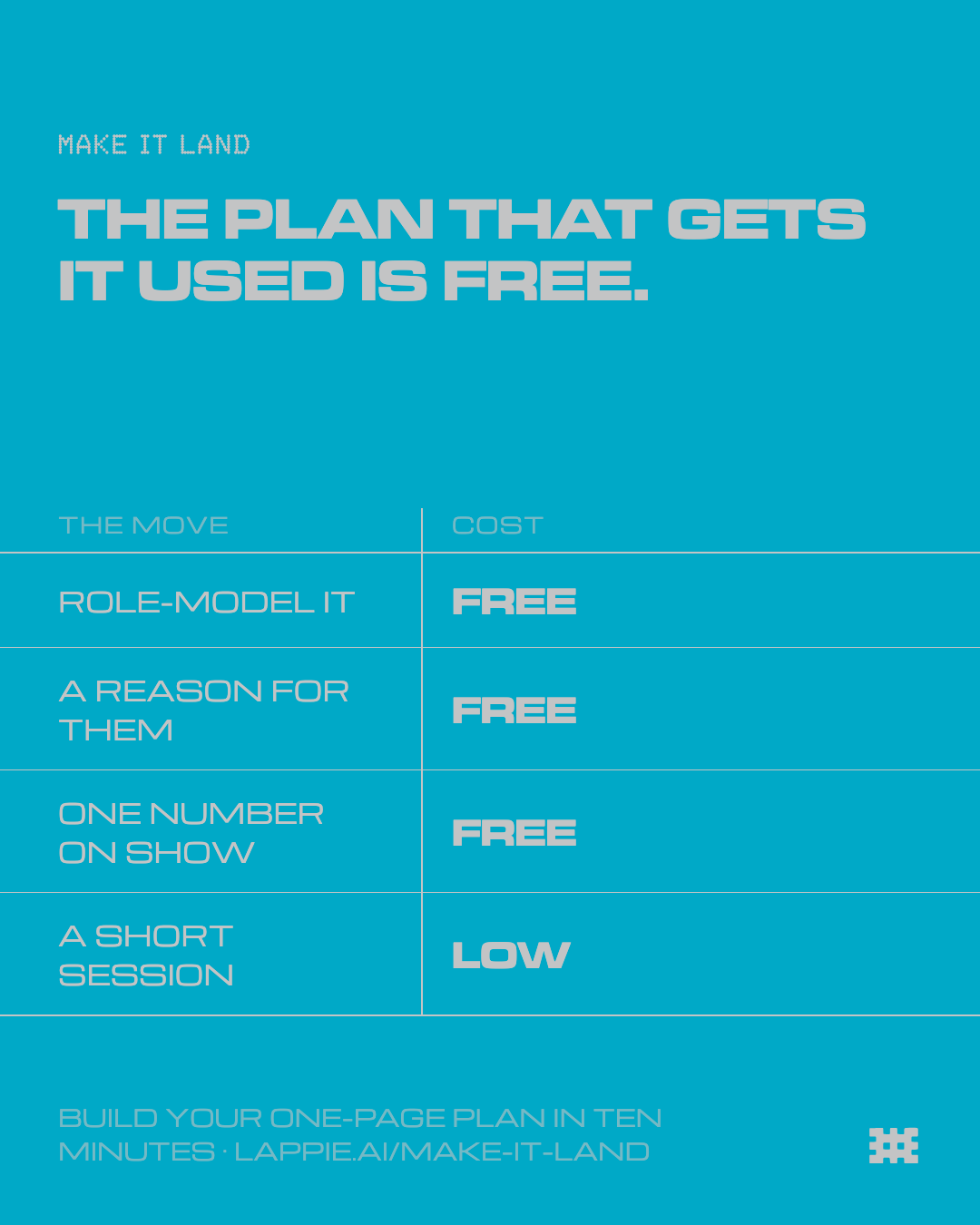
That can read like a second invoice, but most of it isn't money at all. The work that decides whether your tool lands comes down to four moves, and three of them cost attention rather than rands, using the people you already have.
The first move is to have someone respected use it out loud. People copy what their leaders actually do, not what an email tells them to do. So pick someone the team looks to and have them use the tool in a moment people already watch, like the Monday stand-up or the weekly review. That costs you a calendar invite.
The second is a reason that's about them, not head office. Write one plain sentence: this is worth using because it takes the boring forty minutes of paperwork off your plate, so you can get back to the work you actually like. Say nothing about doing the job with fewer people. That story kills adoption the moment it's heard, and it's the wrong story anyway, because the tool is there to give your people their time back. The honest version and the effective version turn out to be the same sentence.
The third is one number, put where people already look. What gets looked at gets used. So pick a single number that shows the tool is working, like returns handled per day or hours saved this week, and put it in the Friday review or on the board on the wall. One number, not a dashboard. A dashboard nobody opens does less for you than one number everybody sees.
The fourth move is the only one that costs a little: a short hands-on session, and someone to ask. Not a course. A half-day with the tool open, and a named person people can turn to in the first month when something misbehaves. That person is usually someone already on the team. The real cost is a couple of half-days, not a budget line that needs sign-off.
So three of the moves cost attention and one costs a couple of afternoons. That is the whole of it, and it decides whether the tool you paid for actually gets used.
One check comes before all four, and it can save you the most money. The question is whether the tool fits how the team already works, or asks them to open a new screen and change their habits a lot. If it's a big habit change, none of the four moves will save it. McKinsey says this plainly: if the solution doesn't fit the real workflow, no amount of change management will fix it. The honest move there is to stop, make it fit the way people already work, and only then run the plan. People use the tool that's already in front of them, and they quietly ignore the better one that lives behind a new login.
The temptation now, with the tools this good, is to put all the attention on the build and assume the using-it will sort itself out. It won't. But the part that actually decides it is mostly free, and it's mostly about people, who are what a good tool should make more of.
So before your next rollout, write the four moves down. Name who shows the way, write the one-sentence reason, pick the one number and where it lives, and decide who runs the short session and who people can ask. Put a name against each one. That page is the difference between a tool that pays back and a tool that gathers dust, and it costs you an afternoon to make.
It's time to clean up.
We built a short, free interactive for exactly this, called Make It Land. In about ten minutes it walks you through the four moves for one tool you're rolling out and hands you a one-page adoption plan with named owners, yours to keep. Most of the moves cost nothing.